Chocolat: Clown Negre

by HRM on March 16, 2012

Theatre review by Harriet Alida Lye

Opening scene of Chocolat: Clown Nègre

Chocolat: Clown Nègre tells the true story of Rafael Padilla, a former slave born in Cuba who became the first black artist in France. Rafael captivated Parisian audiences in the Belle Epoque through his talents as a singer, dancer and clown, working under the stage name of ‘Chocolat’ (a term that, because of his roles, became slang for “ridiculed or abused”).

The monastic Théâtre des Bouffes du Nord – domed, ballustrated, curlicued – is decoratively decrepit in design, effortlessly providing a perfect setting for the play. A white circle is painted on the floor and a white sheet hangs as a backdrop; two strings hang from a central pole; everything suggests a vague tent-like shape. Projected on the sheet in the background, as the crowd fills the theatre, are images of a black acrobat, flashing like a moving Muysbridge photograph. I am reminded of all the components that bring something from one point to another.

Yann-Gael Elléouet, the actor – so charming and alive – who plays Chocolat

Rafael – played by the astonishingly talented actor Yann-Gaël Elléouet – comes onto the stage, his ivory eyes (the same colour as his trousers) scanning the audience, his gaze not prioritizing, not sticking on anything.

“I died in Bordeaux on the 4th of November, 1917,” he says (in French), over the bass reverberations of a heartbeat. When he speaks, his eyes fill – but do not spill – with tears.

Video from ARTE: interviews with the director and writer, and real footage of Chocolat and Footit from the 1900s

For these first few minutes, Rafael is stripped down to pure, simple emotions: sad, happy, afraid. Both Rafael and his world are painted in the stark opposites of black and white. As the play goes on, his character develops all the inflections of any human: pride, confusion, jealousy, ambition, love. By the end, Rafael is nuanced with all shades of gray.

“My father told me to hide your past in the crook of your palm and just dance,” Rafael says, “and to then turn your past into dreams.”

When his parents died, the woman charged with looking after him sent him to Europe – “where there are no slaves” – and where Rafael hopes to find his freedom. He found odd jobs in Spain and arrived in Paris in 1887 at the age of 18, where he was discovered by Footit, a British clown who needed a partner.

Chocolat and Footit

“I found him…in a jungle,” Footit tells his manager. And with this, Rafael – who becomes known to everyone as Chocolat – joins the circus and begins the muddy process of self-discovery, learning too that he can lie about his origins. To some, he says he is American, or even “American-Indian”; to others, Spanish. Later, when he gets caught without his paperwork, the police say they will “send him back to his own country: Africa.”

In Havana, Rafael was a slave because of the colour of his skin. In France, the colour of his skin becomes “the heart of his race – something for which [he is] humiliated.” What is the difference between skin colour and race? Is it that skin colour does not permeate the epidermis, whereas race is what physical anthropologists tried to say came from within?

Rafael and his girlfriend are questioned by the police regarding his identity papers for immigration.

In the circus, Rafael is habitually cast in denigrating roles – he is king of the monkeys, slave to Cleopatra, King of the jungle. Despite this, and his frustration at the racial typecasting, the characters in the play exhibit nothing more than benign curiosity towards Rafael and his skin colour. The wardrobe mistress tries to scrub his skin because she heard that “if you rub hard enough the black turns white,” and a girl with a moon-faced mask says, to herself, “I wonder what the Negroes think of us.”

The play is both a slapstick comedy and a moving allegory that tackles the complex issues of identity, immigration and construction of stereotypes. Chocolat: Clown Nègre cartwheels through divisive contemporary issues that define so many lives; his story is a universal one. Beg, steal, borrow a ticket – see this show.

Chocolat, par Toulouse Lautrec (1896)

*

All photographs by Maixence Fabicolor

Chocolat: Clown Nègre
Théâtre des Bouffes du Nord
March 14 – 18

{ 0 comments }

There will be no survivors

by HRM on March 14, 2012

Rich Tu's exhibition reviewed by Elysha Chang

no surivors

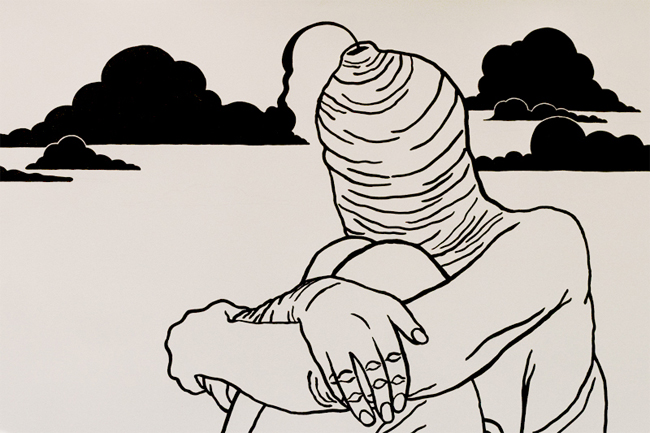
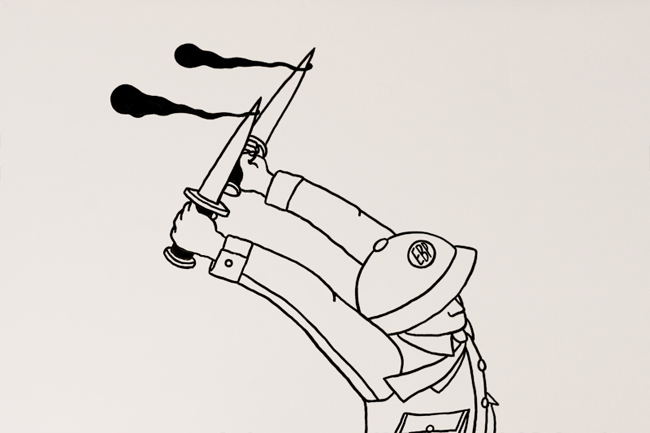
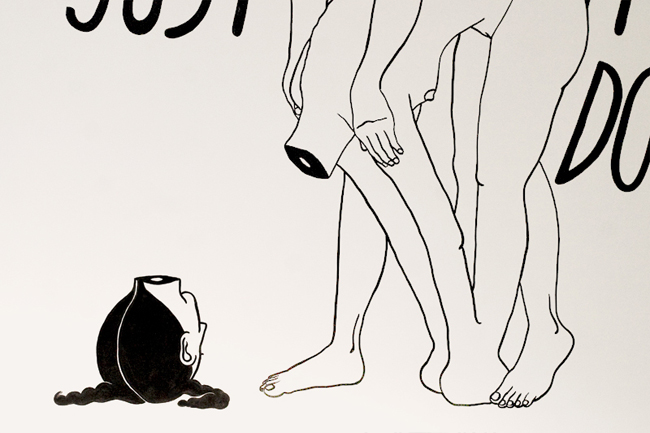
Standing serene in his ragged, orange hat, visual artist Rich Tu is the epitome of calm at the preview of his latest collection, There Will Be No Survivors on Thursday, February 23rd at Norwood Club in NYC. Among gilded candlesticks, artfully mismatched lounge furniture and a lampshade covered in snagged hair extensions, the black and white pieces of There Will Be No Survivors have a calming effect on the schizophrenic chic of Norwood Club.  Simple, black on white illustrations, Rich Tu’s art hovers high on the walls, each piece mounted ornate, golden frames, to show us the contrast. To show us how straight, how no-nonsense, how loud, how real this art really is.

no surivors

I’m not one to be easily persuaded of how real something is, but something about Rich Tu’s There Will Be No Survivors keeps the skeptic in me at bay. There’s something that tempers the heavy noise of Tu’s bright white canvases and hardhitting black lines, the bodies and disembodied parts, and even the collection title’s violence. It’s a stillness in the pieces—something like boredom or good-natured disillusion. It lends the collection a sort of all-encompassing balance, something that everyone in the room seems to relate to. The art of There Will Be No Survivors lays in Tu’s ability to be two things at once, tempering one extreme with the other: intensity with calm, seriousness with irreverence, movement with stasis.  You can see it in Tu himself as he floats around the room, swigging his beer, chatting up strangers and friends, seemingly oblivious to his framed artwork adorning the walls of the member’s-only arts club.  Calm, cool, ever on the brink of being bored, but never actually reaching boredom. All of this while his art—headless bodies, bodiless heads, hacked (but bloodless) limbs—screams at us from the canvas. You can’t quite pinpoint what it is that keeps the art calm, keeps it down to earth. The color? The lack of color? The balance? The contradiction? You don’t know for sure, but a fellow spectator seems to know. He’s leaning out the window, huffing cigarette smoke like he’s howling at the moon. Bleary-eyed but still there, he says it best: “There’s just something about it. It feels good. It feels real.”

no surivors

{ 0 comments }

The Resistance to Change

by HRM on March 9, 2012

HRM at Eyelevel Gallery by Adria Young

resistance to changeOn Thursday, 1 March, on Gottingen Street in Halifax, Nova Scotia, Canada, Eyelevel Gallery opened its fifth re-shelving initiative, an exhibition of the newest holdings in the Eyelevel Bookstore. “The Resistance to Change” celebrates printed matter and art in the form of zines, comics, hand-bound books, screen prints, postcards, collages, and so much more.

Submissions from all over the world fill the gallery until the end of the month, and all works are available for purchase online, including Her Royal Majesty. What are the changes such works resist? Digitalization? Maturation? Alienation? Open since 1974, Eyelevel Gallery invites you to consider these works and reflect upon these questions, as it always has.

Her Royal Majesty at Eyelevel Gallery

Eyelevel Gallery

Her Royal Majesty at Eyelevel Gallery

{ 0 comments }

Hotbed

by HRM on March 7, 2012

by Julia Grummitt

dog


In prose, the worst thing one can do with words is surrender to them.
George Orwell, “Politics and the English Language”

I am waiting in the parking lot that faces the highway and it is snowing. A streak of cars flares past, heading west and into the night. Orange and red, then flurries into oncoming headlights. The cars move fast. Overhead, planes gesture towards the ground, the airport. I’m nervous.

I’ve been listening to the best of Van Morrison while I sip from my cup of still-warmish Tim Hortons. I watch as strangers trudge into the lit-up coffee shop, and then back across the empty rows. It’s getting late. The stereo’s too loud, there’s cream and sugar in my coffee. That’s a secret: I always take milk, no sugar. It feels like I’ve been here for hours.

The car I’m waiting for – a dark blue Ford Explorer – pulls into the lot, slows down and drives up when I flash my lights. It’s very cloak-and-dagger, except that the middle-aged woman who gets out is wearing broken sneakers and a reindeer-patterned polar-fleece. We chat for a few minutes. Then she puts the dog in my arms and leaves.

It’s a moment of such newness that I just stand there, waiting. The animal wriggles in my arms like a child. Still waiting, under the winter stars and airplanes, while she drives away.

This is how the New Year begins: just me and the dog. Soon, the highway is erasing itself as I drive us back towards the small Ontario town where I’ve been living. Not permanently, and that’s important. We go north and the blizzard intensifies. I’ve tied the dog’s leash to the seatbelt, and I am hoping it will not come undone. She bounces from the window to the dashboard and back, her small paws scrabbling against the plastic. Previous owners have given her an absurdly human name and she’s too old for it to change now. So mostly, I just call her ‘dog.’

In the half-light, I can see that her eyes are starting to turn wild. Officially, she’s mine-but-not-mine, and will be living with me only until the rescue organization can find her a permanent home. I’m confused by this unknown creature, a homeless thing baring her teeth at me in the grimace of a smile. I’ve never had a dog before. On the telephone, the woman from the shelter tells me that my options are: a) to fall in love and adopt her, or b) to not get attached.

I’m in my mid-twenties and lately, it puzzles me how permanence seems like the only thing I still cannot afford. My current apartment is full of hardcover books, mementos and the bric-a-brac that a quarter century of living brings. Much of the time, I feel vague. Unsettled. And it scares me, the way this feeling isn’t lessening with time. I live surrounded by family heirlooms and vintage suitcases. Now there’s this dog and I wish that I could keep her, but I can’t.

I think what I’m trying to say is I’m the sort of person who would end up with a dog who’s not my dog. And also, that this forced temporariness allowed for a fondness I might not otherwise have felt. We matched, that dog and I.

I haven’t loved small-town Ontario as much as I’d expected. I moved here to attend graduate school and while it’s not a bad place, it has been hard to be away from anything that feels like the past or some possible version of my future. There are endless flower shops, diners with checked-floors and three different costume shops with synchronous window displays. There always seem to be people on street corners waiting for the lights to change. Mothers pushing strollers, lanky-haired boys in workmen’s socks and hoodies. Professors. Undergraduates. Couples. For me, this is a dot on a map – a specific moment in a chronology of times. And here I have too much time to dwell in the sharp tangles of memory that surround you.

Anyway, the dog seems oblivious to all of this and we quickly fall into familiar routines. She shudders and scuffles at the top of the stairs whenever I come in the front door. Her tail wags. She crouches low and sticks her head forward, grinning like a deranged person in a way I find both pathetic and endearing. She always seems hungry or worried, and she will not let me out of her sight. At night, she pushes herself under the covers and sleeps with her paws pressed against my stomach, or curled up at my feet. Her body twitches with the small rabbits of her dreams. Sometimes, in the early hours of the morning, I reach out and place my hand on the undercarriage of her ribs, feeling for the whir and echo of her heart.

Friends, family and an ex-lover have come to visit me here, but I have spent all my nights in this apartment alone. When I wake in the mornings, the dog emerges from the covers like an Old Testament prophet, sky-blue sheets draped fiercely about her face. First thing every day, the dog just watches me for a while. She stands with her front paws on my chest while she does this, staring down at me with wise, blank eyes. I can feel the weight of her pushing my body into the mattress, back into earth. When she does this, I think she is trying to mend sorrows she senses but cannot understand. She licks my face, starting with my ears, ending at the tip of my nose and her breath smells like dog. We go for walks.

In the evenings, I light candles and scatter fleur-de-sel into the pasta water. I bake bread. I drink black rosehip tea. The dog eats multi-coloured treats shaped like summer vegetables. We look out the window together while endless snow swirls and blankets our street. The dog sits in my lap, her head resting on my forearm while I awkwardly type essays around the cave of her body. I am finding peace in this snow-globe of a place.

The dog and I rustle together through parts of town where I’ve never been before: mostly rows and rows of identical houses. Did you know there’s a whole neighbourhood of churches at the heart of this small city?

I get a call at the end of January with good news. The very next day, I carefully fold blankets matted with dog-hair (white, and fine as my eyelashes), placing them with veterinary records, chew toys and an almost-full bag of kibble back into her basket of things. We wait in the living room, the dog and I. She is curled in my arms, warm and alive, staring up at me. My feet trace hardwood circles on the floor. I tell her it’s going to be okay.

There’s a knock at the door and I go downstairs to meet the family that’s come to take my dog away. But that’s not right – they are here to take their dog home. I sense the story shifting; I become peripheral. There’s a man, a woman and their little girl, bundled up in puffy winter jackets. The dog bounces all over them, licking their faces. She follows the girl through the quiet rooms of my apartment and I try not to feel betrayed.
They seem nice.
“Thank you for taking care of our dog,” they say.
In the brief melee of putting on their boots and going outside, when nobody’s watching, I say goodbye to the dog. It’s quick. She doesn’t seem to notice. And then they are gone.

I lock the door and walk up the stairs, slowly. I am thinking about the dog. What she knew of me, and the limitations of our attachment too. I feel such profound loss, but the deepest truth is that part of me is pleased to see her go. To feel the freedom of that. It isn’t love, not really; that’s something too complicated and tangled up with patience, with time. For both of us, it has been a lesson in necessity; finding ways to survive this moment and the next. Belonging.

At the top of the stairs, camouflaged against the border of a rug from Ecuador, I find the tennis ball. It’s the dog’s favourite. We’d been playing fetch in the hallway all afternoon; the dog, a resilient streak against soft grey walls and me, standing in the doorway of the kitchen, waiting for her return. Later, I showed the little girl how to play, trying to keep them occupied while we filled out layers of paperwork.

I pick up the ball and run downstairs, outside. I don’t put on any shoes but still, I’m moments too late. I stand in the middle of the icy street, just wearing my socks. One foot, then the other. I can see the minivan’s red brake lights in the distance, already turning left. Now they’re out of sight. It’s cold and I wrap my sweater tighter around my body. I look up and there are stars.

Do you remember the last night we spent together? Cold. Star-scattered. An ending already seemed inevitable and you told me that someday, I would write about us. It would be a story about memory and loss. You said this as if you were bestowing a rich and bitter gift and in that moment, I believed you.

But this is the deepest truth: our lives are like palimpsests. Love is complicated. Right now, I am standing in an empty street, holding a red tennis ball.
I am here.

This is the story.

{ 0 comments }

The Daguerrotypist

by HRM on February 29, 2012

report by Lacey Haynes

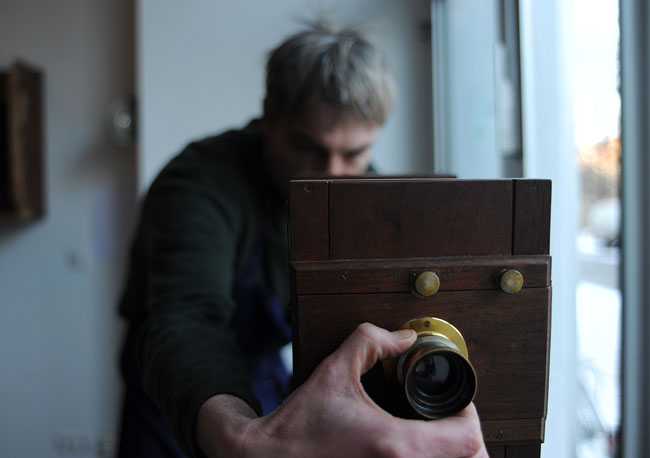
While strolling along the Kreuzkölln canals on a chilly winter’s day, photographer Brigid Annand was pulled off of the street by Jeremy Lynch to have her photo taken. What she soon learned was that Jeremy wasn’t employing contemporary photographic methods for this impromptu portrait session. Lynch’s Human ein Daguerreotypie Projekt explores the very first picture taking techniques from the mid 1800s – using silver plates, a very old camera and a slew of special chemicals to process the images.

Through his vintage lens, Lynch explores a contemporary society and ideas encompassing human life as disposable and oftentimes replaceable. Lynch has taken it a step further with his current project, actually doing away with his online presence and computing devices, in favor of communicating through good old fashion letter sending – letters constructed on a typewriter nonetheless. It hasn’t been an easy transition for Lynch, especially when contacting galleries, but the unique nature of receiving a type-written letter has piqued the interest of a slew of gallerists.

Brigid Annand returned home that day and told partner and filmmaker Pawel Jarecki about her unusual encounter with Lynch. Armed with two cameras, the Australian couple returned to Jeremy Lynch’s studio to further investigate his Daguerreotype project.

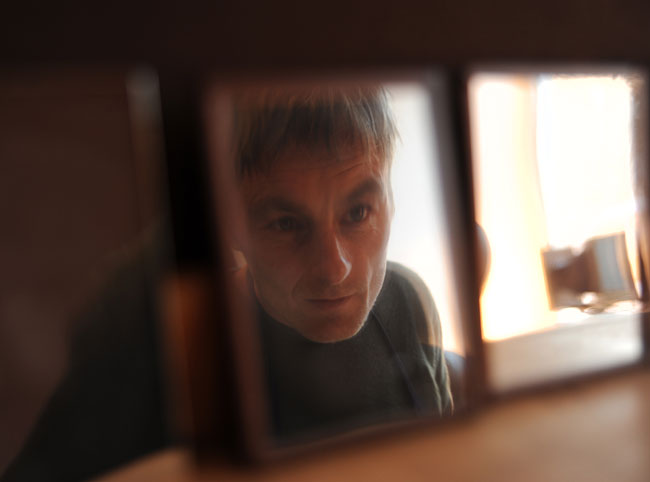
Jeremy Lynch

Jeremy Lynch

Jeremy Lynch

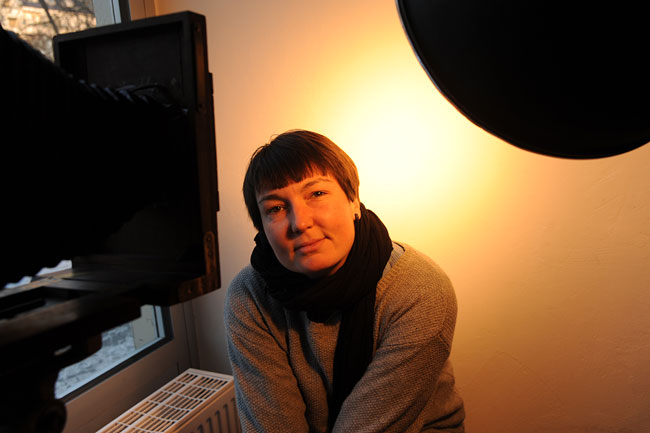
Brigid Annand

Table

Typing

All images by photographer Brigid Annand. Video by filmmaker Pawel Jarecki.

{ 0 comments }

ISSN: 2116 34X