An Interview with Rob Canali, by Lendl Barcelos
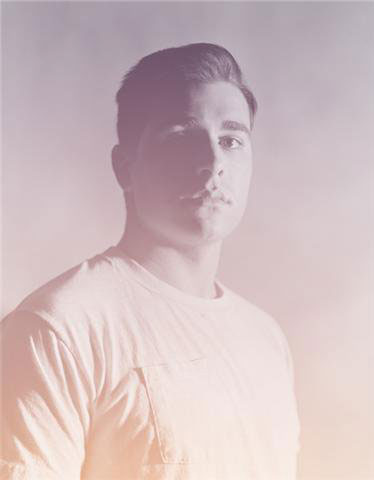
Robert Canali is presenting work as part of two exhibitions coinciding with this year’s FIAC festival. These are his first exhibitions in Paris. YIA (Young International Artists) Art Fair showcases 25 artists under 30 years of age. Appartement will also host some of Rob’s work. 18 – 21 October.
Lendl Barcelos: First things first, tell me about your take on abstract photography.
Rob Canali: Well, every photograph is an abstraction in the sense that it is an echo of what exists, but it’s not exactly that. « Ceci n’est pas une pipe » It looks like it, but it’s not it—it’s a signifier. It inherently abstracts whatever it perceives by the virtue of its design. The way the light refracts through the lens effects the scale, proportion, colour and light. Especially when shooting film, colours don’t seem natural, so I think the subtleties of the medium promote and provoke abstraction, but, as a whole, the idea of a photograph is abstract.
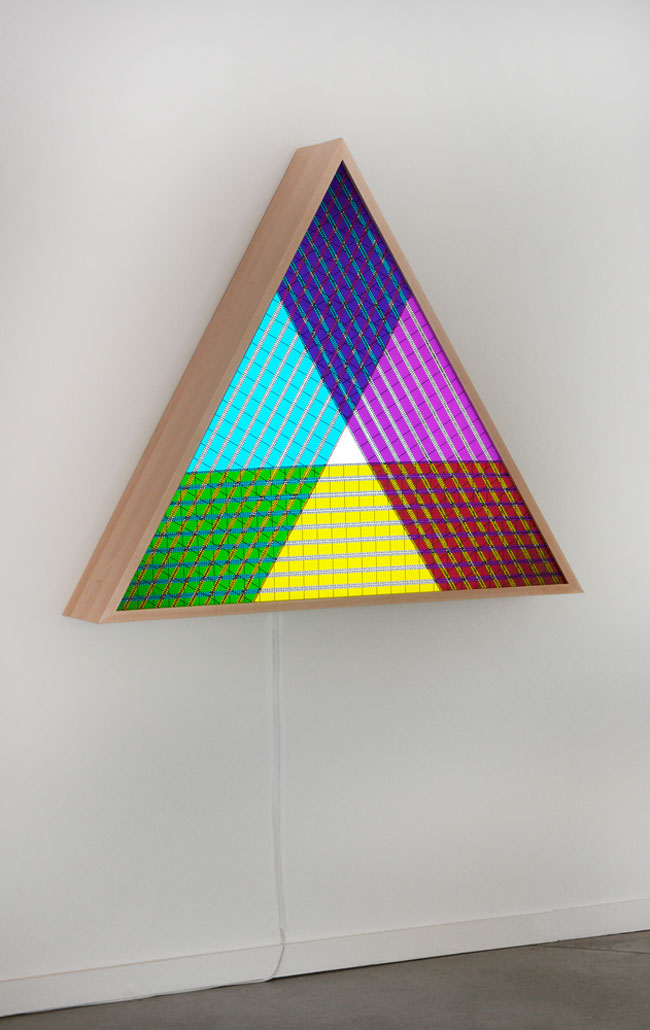
L: For me, it’s always hard to think of your work as abstraction because you’re working with something so concrete: light.
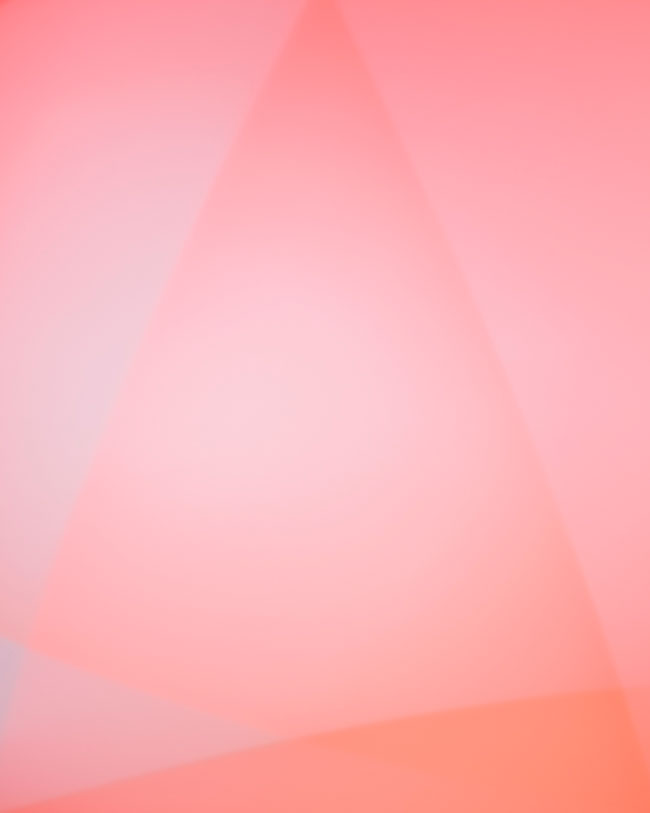
R: That’s why the term ‘abstract photography’ is something I struggle with. As soon as I had finished my first ‘cemented’ body of work, In Dust, it received criticism that suggested it to be manufactured or made through manipulation that existed beyond the means of photography. Being someone who wasn’t as well versed in the theory or limitations of photography, I couldn’t comprehend where these criticisms were coming from because I knew the work came from the camera and the negative inside it. I wondered why could I not make light and the spectrum in which it exists the subject. I think that became an increasing concern for me because I am red-green colour blind, although none of the work was about this deficiency. After becoming more versed in photography by taking classes and experimenting in the darkroom this deficiency became a burden because I couldn’t colour balance a print properly; I couldn’t recognize a cyan cast or magenta cast. It was in those moments that I thought, “Who gives a shit? It’s fine”. These casts are inherently unique to the photographic process, so why would I deny any viewer the opportunity to allow the camera or the negative to showcase itself.
L: Tell me about your first camera.
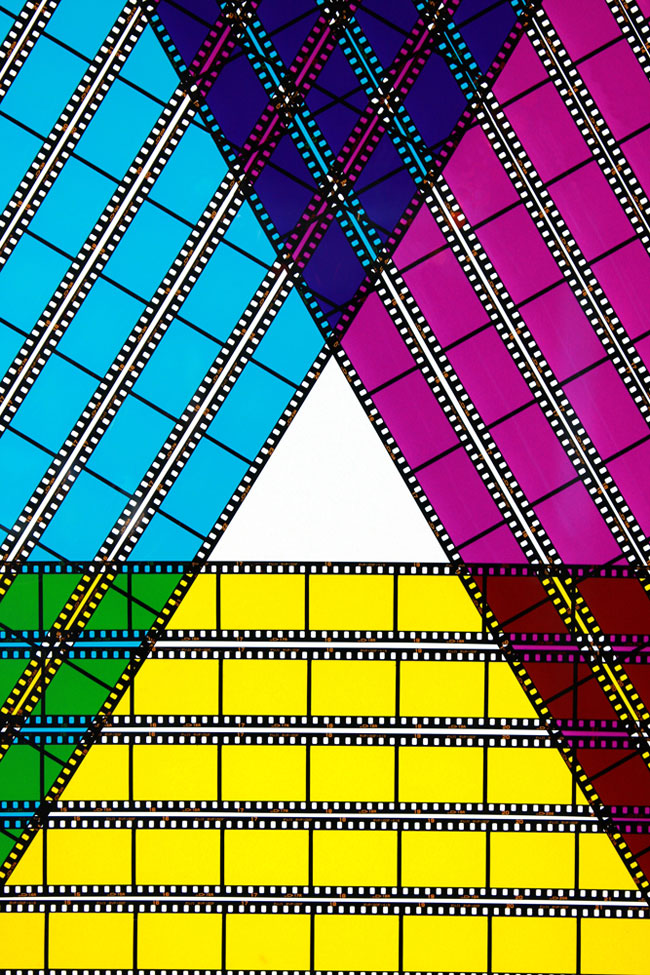
R: I worked as an assistant to an architectural photographer and as payment for my last two months of work I worked for free in return for this large-format camera. The camera I used before that was my father’s, it was the family camera. It only came out for special occasions, so my whole concept of photography as an art practice was really skewed. I thought you only used it to make a memory. When I received my own camera, I had no idea what the thing looked like, I just told the person I worked for that I would like to work with a camera like he worked with. I knew the camera was valuable but disregarded that. Literally, whatever latch I could flip or thing I could thread out, I did—every single piece from the lens to the bellows to the standards. I even took apart the tripod. Just to see. I was really surprised to see how little there was. There was really nothing to this camera. I was sincerely baffled. I thought it would be as complex as a watch, but it was as pared down as could be: it’s a black box with a lens on one end that lets light in and a negative on the other side to catch it. Putting it together was another story.
[they laugh]
R: It was in its reassembly that I assembled the idea to really play with what was going on in the camera. The 35mm camera is too small to put things in. It is more like a watch with mirrors that flip and invert.
L: Most people are familiar with that.
R: As was I. That was all I knew existed as a camera. When I found myself in the studio with the large-format camera I started implementing and incorporating the few aspects of photography I had come to learn. So I took the same devices and filters that you mount to your enlarger and mounted it directly onto the inside lens of my camera to capture its effect directly. I shot light directly at the camera and was able to capture the interference between the lens, the filter and the negative. The negative has this remarkable ability to capture any sort of gesture of refraction that happened through these layers. The results were beyond me. I quite literally could not have predicted any of them. A large part of me assumed it was all going to fail because I had never done it before and I had no reference point. After processing my first 10 sheets I had 1 or 2 that stood out. It was kind of magical because it was the first time I started to look at the world photographically, considering how this mechanism interprets and perceives the world around us and how it has the ability to perceive it in ways that otherwise we could not. It opened up the floodgates and from there on I spent a lot of time inside the camera—that’s where my head was. It has been argued that anyone can use a camera because it is the camera that does the work. That may be, it is doing the work, I admire the work it’s doing and I like to showcase it.
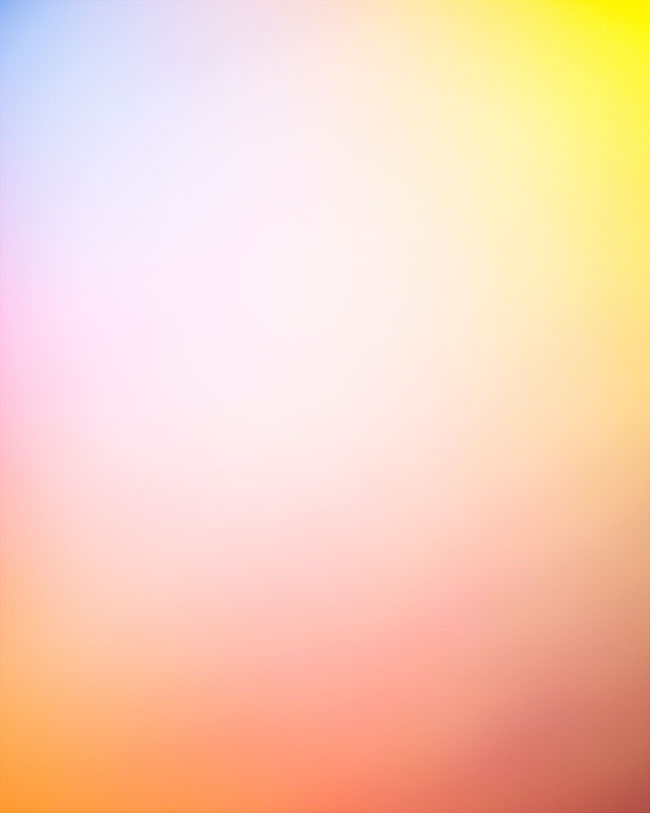
L: What’s striking to me, hearing this description, is that your photography happens elsewhere. You interfere with the mechanism itself and that’s not what people who have a camera in their hands are typically doing.
R: No, because their cameras cost too much money to play with!
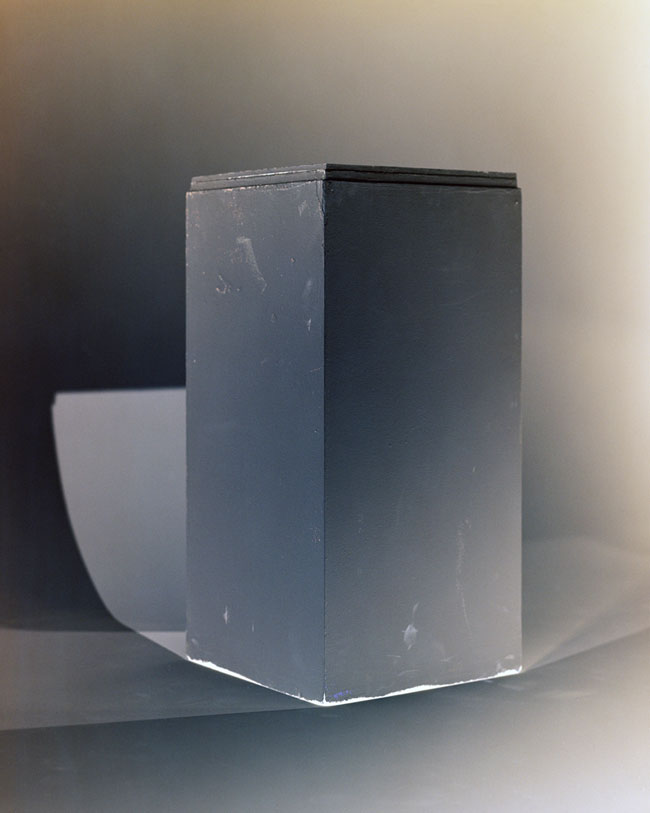
L: I feel your approach is scientific. In a positive sense, it’s a kind of naive science in that it is experimental. You immerse yourself in darkness both in the sense of unknowing and the ‘void’ inside of the camera. You really don’t know how it’ll be captured, but at the same time you have ways of playing inside the darkness to allow the light in.
R: Yeah, even in the darkroom. It’s a lot about darkness. Ultimately, I want the work to conjure more questions than answers. That’s it.
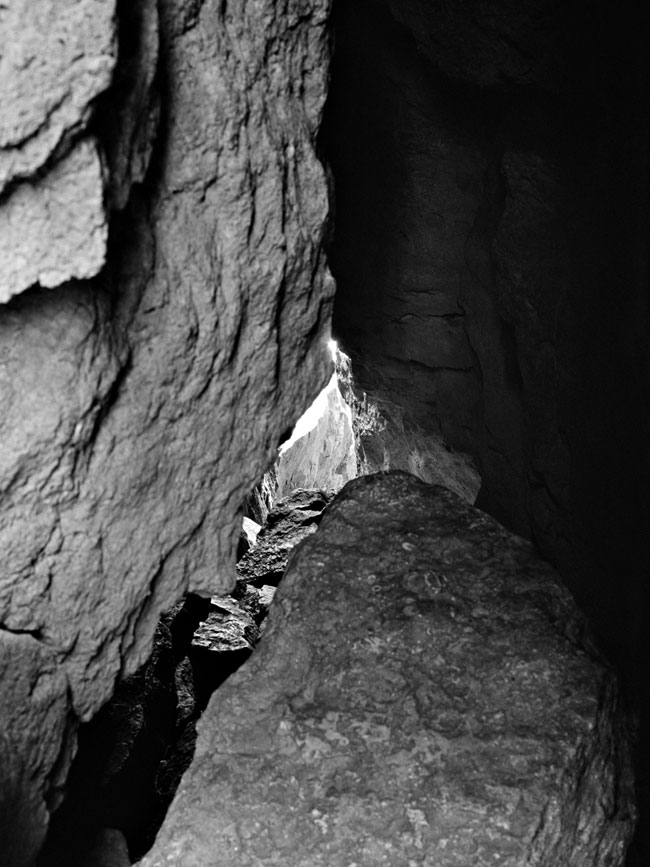
L: It’s funny to me that the question that the majority of your photographic work generates is “what is it?” and the answer is the most obvious and simplest “it’s light”. I love how literal it is: photography.
R: And the most simplistic answer is only rewarded with more questions. There’s no sales pitch in it, but it can be so hard for some people to comprehend. If there were a way to sum up my practice, in addition to generating questions, it would be the idea of repurposing reality as artistic gestures.
L: Now a slightly weird question: do you feel bad that you are capturing light? I mean in a sense you’re holding it prisoner within the photograph. I’m just wondering in opposition to your sculptures, where the light is allowed to bounce around and play.
R: Well, with the sculptures especially, the light activates the piece. The piece is dead without it. But with regards to photography, I’m not romantically tied to light in that way. Maybe light is like cockroaches—it’s everywhere. I’m not so torn up about it inside because I know without it you wouldn’t be able to see what I’ve captured. It’s everywhere, always. It’s constantly in contact with us, thus the name In Dust at the time. Dust is us floating around, little particles of skin—everything, everywhere on a microscopic scale. If you’ve ever seen, through the crack of a door or a window, dust floating through the air: it makes light visible. It’s one of those phenomena. When I say I capture light I’m not trying to harness its energy, to detain it or constrain it, I’m trying to showcase it in another way just as the dust might. It’s one of those subtle nuances in life that you might take for granted.
L: That’s a beautiful of capturing what you do.
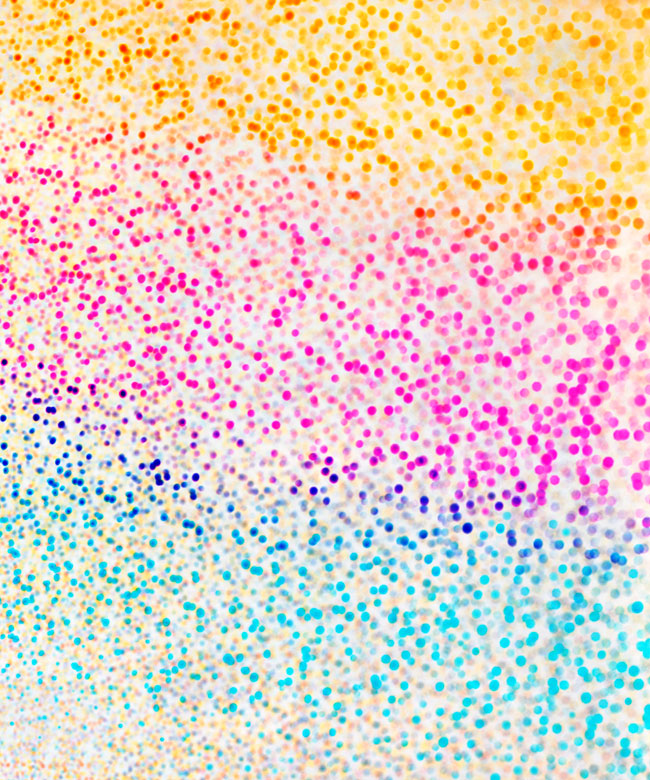
Robert Canali received his BFA from York University. His practice is marked by process-driven techniques that explore reality and repurpose it as artistic gestures by means of photography, sculpture and installation.
Lendl Barcelos tends to be what he pretends to be. Currently, he is pretending to be a concept engineer, an amateur of hand-made textiles, a sound artist, and a détourned situationist. He is associated with The Passive Collective, an infraperceptible arts and literary endeavor.
Robert and Lendl both live and work in Toronto.